
Headway's Supervisory Billing: What You Need to Know
Supervisory Billing, Headway, Lumvia, Practice Operations
Headway Just Announced Supervisory Billing. Here’s What They Didn’t Tell You.
Looking at Headway’s new supervisory billing pilot as a senior software engineer, the pattern is familiar: a platform ships a shiny abstraction, everyone assumes they have unlocked something magical, and the underlying systems quietly stay exactly the same. If you run a group practice, your risk is not missing the feature. It is misunderstanding the stack it sits on.
1. Headway Just Announced Supervisory Billing
Headway quietly rolled out a supervisory billing pilot for group practices, now active in Texas and New York for select payers like Aetna, Cigna, and BCBS Texas (Headway docs). Provisionally licensed clinicians can bill under a supervisor’s NPI through Headway’s contracts, as long as everyone lives inside their Sigmund Lite workflow and follows their note, co-signature, and disclosure rules.
In engineering terms, they built an orchestration layer between four actors: the supervisee, the supervisor, the platform, and the payer. That is a solid product move. But it is not a private API into the laws of physics. They are wiring together systems that already existed, the same ones your practice can wire together directly.
2. The Three Layers Nobody Explains
Think of supervisory billing like a three-tier architecture. Everyone talks about the UI (claims getting paid), but the important behavior lives in the layers underneath:
Licensure — governed by your state board
Employment — governed by labor law, not clinical judgment
Insurance billing — governed by each payer’s contract, full stop
Headway did not change any of these rule books. They implemented a specific configuration that works for their contracts in a few states. As engineers would say, they are a framework, not the underlying protocol.
3. Licensure — governed by the board
If you are an LPC Associate in Texas, you already know the board must approve your supervisor. That supervisor credential exists to satisfy the board’s requirements for you to progress toward full licensure. It does not create an insurance contract, and it does not guarantee a single dollar of reimbursement. Licensure supervision and supervisory billing simply share some of the same people; they do not share the same rules.
4. Employment — governed by labor law, not clinical judgment
Plenty of practice owners default to 1099 contracts for associates because it looks cheaper and simpler. But the Texas Workforce Commission (and the IRS) do not care what your contract says. They care who controls the work: who sets schedules, who dictates processes, who owns the clients. That is what determines whether someone is legally a W‑2 or a 1099, regardless of what you named the PDF.
💡 Pro Tip: Getting licensure supervision right says nothing about whether you got employment classification right. They are evaluated by different authorities using different criteria.
5. Insurance billing — governed by the payer, full stop
This is where most people start the conversation, and it is the layer you control the least. Each payer decides if, when, and how an associate’s work can be billed under a supervisor’s credentials. Some contracts allow it. Many do not. Headway’s pilot works only where their specific payer agreements permit it, for example Aetna, Cigna, and BCBS Texas in the Texas pilot (source). No amount of clean licensure or perfect employment docs can override what is written into a payer contract.
6. So What Did Headway Actually Do?
Model this like code. There are four contracts in play: between the supervisee and your practice, your practice and Headway, Headway and the payer, and (sometimes) you and the payer directly. Headway built a workflow that chains those together so that, for certain plans, an associate’s session can be billed under a supervisor’s NPI through Headway’s contract.
class Contract:
    def __init__(self, party_a, party_b, rules):
        self.party_a = party_a
        self.party_b = party_b
        self.rules = rules

def can_supervisory_bill(payer_contract):
    return payer_contract.rules.get("allows_supervisory_billing", False)

# Headway's world
headway_payer = Contract("Headway", "PayerX", {"allows_supervisory_billing": True})
your_payer  = Contract("YourPractice", "PayerY", {"allows_supervisory_billing": False})

print(can_supervisory_bill(headway_payer))  # True  -> via Headway
print(can_supervisory_bill(your_payer))     # False -> unless YOU renegotiate
That is a real operational achievement. It is not a secret capability only they possess. You can credential your own business, negotiate your own payer contracts, and structure your own supervisory billing rules where payers allow it, without inserting a third-party platform into every transaction.
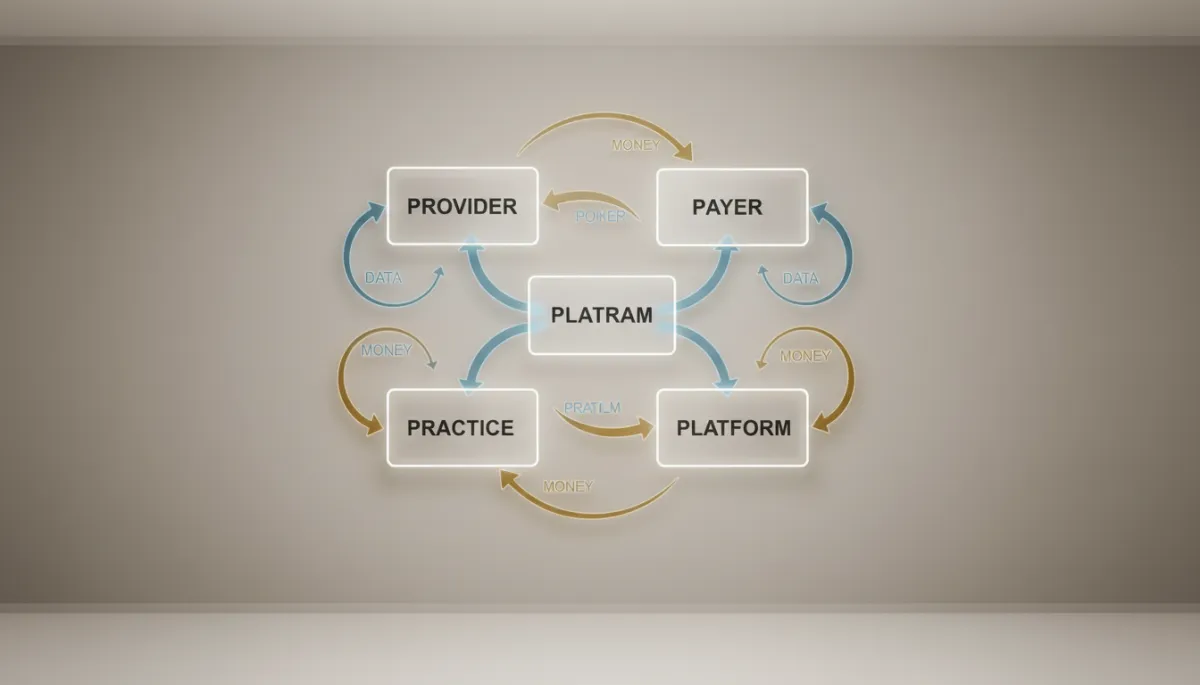
Once you see the contract graph, it becomes clear you can own the edges yourself.
7. Convenience and Ownership Are Not the Same Thing
Platforms sell convenience. Engineers learn early that every abstraction is a tradeoff: you ship faster, but you give up control of the underlying behavior. With Headway, you are operating inside their contracts, their workflows, and their roadmap. Texas and New York today. Maybe your state and your payers later. Maybe never.
When you build supervisory billing inside your own practice, you own the contracts. You decide which payers you work with, how you structure supervision, and how money flows. You are not waiting on a pilot expansion or a product manager’s Q4 priorities to determine what your business is allowed to do.
8. The Real Problem This Exposes
Nobody sits clinicians down and walks them through how money actually moves through a practice. No one explains what a payer contract governs, why W‑2 versus 1099 is a legal classification instead of a budgeting trick, or why clinical supervision and supervisory billing live in different rule books. That knowledge gap is exactly where billion‑dollar platforms get built.
From a developer’s perspective, this is like building your entire company on a third‑party API you never bothered to read the docs for. When that API changes pricing, scope, or terms, your business model moves with it. That is not innovation. That is vendor lock‑in.
9. This Is Exactly Why Lumvia Exists
Lumvia’s whole premise is simple: you should own your stack. Lumvia does not own your insurance contracts, you do. We help you credential your business and your clinicians, map out which of your payers permit supervisory billing, and implement processes that respect all three rule books: licensure, employment, and insurance.
In engineering language, Lumvia is closer to an infrastructure partner than a closed platform. You keep control of the environment, the contracts, and the data flows. We help you understand the configuration and keep it within spec so you are not surprised later by clawbacks, misclassification issues, or payer denials you accidentally signed up for.
📌 Key Takeaway: Licensure, employment, and insurance billing are three different systems with three different rule books. If you are building a group practice, you need to know exactly whose infrastructure you are standing on.
Own Your Contracts, Don’t Rent Access
The right question is not, “Can I supervisory bill through Headway?” The right question is, “How do I build this inside my own practice so I am not dependent on someone else’s roadmap?” As a senior engineer, I would never ship a mission‑critical system that only works if a single vendor likes me this quarter. Your practice, your livelihood, deserves the same level of architectural thinking.
Learn all three layers. Understand your contracts. Then decide which tools you invite into your system, not the other way around. If you are ready to own your contracts instead of renting access to someone else’s, book a free 30‑minute call with Lumvia: https://calendly.com/lumviaid-info/30min.